Online menu or social media: which brings more sales to your business?
Online menu versus social media sales: compare costs, reach, and conversion to choose a more efficient digital strategy.
Listen to the article
The competition between online menus and social media doesn't have to end with the choice of just one channel. Understand the role of each resource and how to turn discovery into orders.
Quick response
Online menus and social media serve different functions. Social media helps reach people, spark interest, and engage with the audience; the online menu organizes products, prices, photos, hours, and pathways for ordering. For small and medium businesses, the combination is often more effective: use social content to generate discovery and direct the customer to a dedicated, clear, and updated page. The decision should consider the type of sale, frequency of updates, service capacity, and how much the business needs to measure results without relying on a single platform.
Summary
- Social media excels in discovery, relationship building, and distributing visual content.
- The online menu serves as an organized showcase for those who want to explore options and make a purchase.
- The correct comparison is not just channel against channel, but attention generated against facilitated conversion.
- The most comprehensive strategy connects publications, social profile, menu, delivery, and customer service.
- Smaller businesses should start with the weakest point in the customer journey and evolve the structure with data.
What is an online menu?
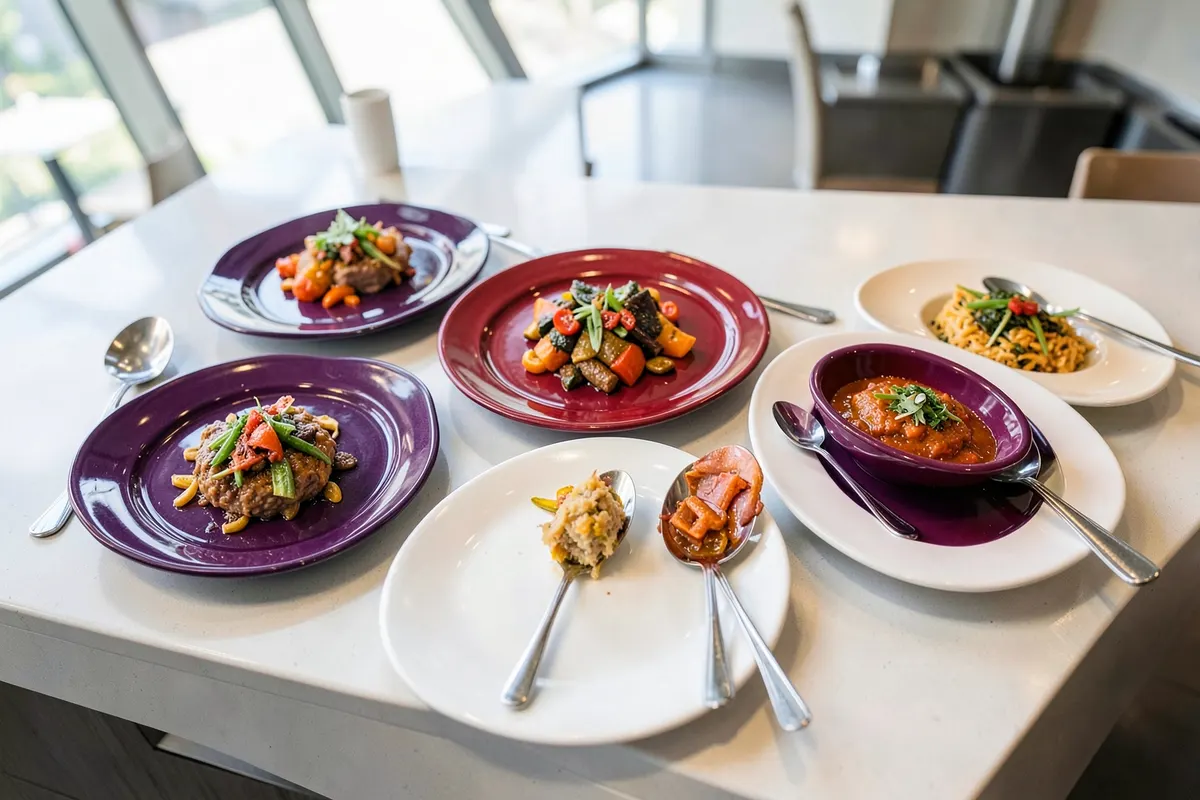
An online menu is a digital page that presents the products of a food business, with information for consultation and, when configured for it, order forwarding. It replaces the reliance on static images, outdated files, and repetitive messages during service.
In practice, the online menu gathers the item name, description, price, photo, add-ons, ordering methods, operating hours, location, and relevant links in an address accessible via mobile. The customer can reach it through a QR Code, a search, a message, or a post on social media.
The most important difference lies in the purpose. The menu does not need to compete for attention all the time; it needs to respond well when a person wants to know what is available, how much it costs, and how to buy. Therefore, its organization influences trust and reduces effort before placing an order.
For a restaurant, snack bar, café, pastry shop, meal prep service, or event business, this page can also serve as a central source of information. If the price changes, if an item is temporarily unavailable, or if the hours are altered, updating a well-managed point prevents the customer from receiving different versions of the same offer.
NaInter.net understands the smart website as a base to host the menu, promote services, hours, location, photos, social media links, and delivery services. The platform also offers AI virtual assistant, capturing chat and sending it directly to the company's WhatsApp, a feature that expands the role of the menu beyond simple consultation.
| Criteria | Online menu | Social media |
|---|---|---|
| Main function | Organize the offering and facilitate consultation and ordering. | Generate discovery, interest, and relationship. |
| Best stage of the journey | Consideration and conversion. | Discovery and consideration. |
| Update | Concentrated on a central page. | Distributed among profile, publications, stories, and messages. |
| Initial metric | Accesses, contact clicks, and order initiation. | Reach, views, interactions, and profile visits. |
| Main care | Keep products, prices, hours, and links accurate. | Publish coherent content and respond to the audience. |
| Recommended use | Destination for those who want to consult or purchase. | Source of attention and qualified traffic. |

How do social networks work for sales?
Social networks for sales work by combining content, discovery, relationship building, and directing to a commercial action. The business publishes photos, videos, offers, behind-the-scenes content, and useful information, engages with interested parties, and guides them to the menu, service, or order.
The journey often begins before there is a clear intention to buy. An image of a dish, a preparation video, a responded review, or a post about an event can make someone remember the brand. The social network is especially useful at this stage because it places the company in an environment frequented daily by the audience.
After discovery, trust signals come into play. Responded comments, well-organized highlights, location information, and real product demonstrations help the visitor decide whether to proceed. The sale does not happen solely through the publication; it depends on the continuity between the promise seen in the content and the experience found in the next channel.
Visual content holds significant weight for food businesses. The Back of House describes Instagram as a key channel for restaurants due to its strength in food photos and videos, as well as highlighting the relevance of social commerce and integrated deliveries. This shows why the social network can generate desire, but does not eliminate the need for a clear structure to complete the order.
A study published in Frontiers in Nutrition in 2025 and available on PMC analyzed digital marketing trends of Brazil's leading meal delivery platform on Facebook and Instagram, considering the period from 2011 to 2022. The article aimed to analyze trends and digital marketing strategies on these networks. The data is useful because it highlights the permanence of social networks as a space for strategic communication, without meaning that every interaction automatically converts into a sale.
For small businesses, selling through social networks requires operational discipline. It is necessary to maintain coherent information, respond to recurring questions, indicate the next step, and observe which content attracts qualified conversations. Without this care, the profile may receive attention yet still generate frustration due to a lack of price, availability, or a direct path to purchase.
What are the advantages of an online menu?
Ease of access and updates
The main benefit of the online menu is concentrating information on a page designed for consultation. Instead of searching for a lost price in message history or enlarging an image with small text, the customer finds categories, descriptions, and ordering instructions in a more predictable structure.
Updating also tends to be simpler when there is a primary source. A restaurant that changes a combo, removes a flavor, or modifies hours can correct the information on the menu and share the same address again. This helps reduce discrepancies between what was published on a previous date and what is currently available.
Mobile access is crucial in the Brazilian context, especially when the customer is on the street, at work, or at home and wants to order without installing anything additional. A lightweight, readable address compatible with small screens reduces friction. Contact, location, and delivery buttons need to appear clearly, without forcing the person to navigate a confusing sequence.
This ease does not eliminate the need for review. A menu with a beautiful photo but lacking price, availability, or indication of add-ons shifts the work to customer service. Maintenance needs to be part of the business routine, just like checking hours on holidays, operational changes, and seasonal items.
Better product visualization
An online menu allows for presenting the product in context. The photo can be accompanied by a description, size, ingredients, customization options, and combination suggestions. This presentation helps the customer compare alternatives without relying on a manual explanation for each order.
Visual organization also favors decision-making. Well-named categories, information hierarchy, and highlighting strategic items make reading faster. The goal is not to fill the page with images, but to guide the eye to what the business can truly deliver with quality and consistency.
The presentation needs to be accurate. Excessively edited photos, vague descriptions, and a lack of information about ingredients can raise expectations and negatively affect perception after delivery. For food, clarity about portions, sides, and possible restrictions is as important as aesthetics.
When the menu is associated with a website, the business can also gather address, hours, contact channels, and social media in the same environment. NaInter.net offers this type of menu hosting and allows for the promotion of operational elements in a microsite with an AI virtual assistant. The strategic value lies in reducing the distance between viewing the item, asking a question, and starting the order.
Have a professional website working for you 24/7
Let the Artificial Intelligence of NaInter.net create the perfect showcase for your business to attract customers every day.
What are the advantages of social media?
Audience reach and engagement
Social media can bring an offer to people who are not yet familiar with the business. Shareable posts, short videos, local content, and collaborations with the community can increase exposure without relying solely on those who have already accessed the menu. This discovery capability is the main advantage over a page that the customer needs to search for or receive via link.
However, reach should not be confused with purchase intent. A post may generate views and comments because it is entertaining, beautiful, or relevant to the community, while few users are ready to order at that moment. Therefore, analysis needs to separate attention, profile visits, clicks on the menu, conversations, and sales.
Deloitte Digital reported in 2024 that restaurants reported an average increase of 9.9% in B2C revenue directly associated with social media strategies. In the same study, 90% of restaurants said they consider social media very or extremely important for digital marketing. These numbers reinforce the commercial weight of the channel but do not replace the measurement of the specific performance of each business.
Content can also support in-person visits. According to Deloitte Digital, 51% of surveyed restaurants pointed to promoting in-person events on social media as the most effective way to generate visits. This data is especially relevant for cafes, bars, restaurants with music, event venues, and operations that wish to combine on-site consumption with delivery orders.
Direct interaction with customers
Public or private conversations allow for understanding questions that the menu alone does not capture. Questions about ingredients, availability, preparation time, delivery area, and payment methods reveal friction points in the journey. When these questions are repeated, they can guide improvements in content and the operation itself.
Interaction also creates opportunities to address complaints and maintain relationships. A clear, polite, and coherent response can prevent a specific problem from turning into a permanent loss. The same care needs to be taken in comments, direct messages, and messaging apps linked to the profile.
However, there is an operational limit. If every sale depends on a manual conversation, the growing volume of messages can overwhelm the team. Saved responses, highlights, links to the menu, and responsible automations help maintain agility without making the service impersonal.
The purchase intent in delivery apps influenced by social media was examined in a chapter published in 2026 by Springer. The study identified delivery time and app interface as the most influential factors in this intent. The practical conclusion is clear: social media can spark interest, but the experience in the ordering channel needs to be simple, fast, and coherent.
Online menu versus social media: which is better?
Neither is universally better. Social media is stronger for attracting and engaging people; the online menu is more suitable for organizing the offer and guiding the decision. For most small and medium businesses, the best answer is to use each channel at the stage where it delivers the most value.
Cost analysis and investments in digital marketing
Cost comparison starts with the type of work involved. Social media may seem free because creating a profile and organic posting do not necessarily require a direct financial investment. Still, they consume time, planning, visual production, responding to messages, and tracking metrics. When the business boosts posts, the media budget becomes another component.
The online menu typically requires investment in creation, hosting, maintenance, or setup, depending on the chosen solution. In contrast, its function is more concentrated: presenting the offer and supporting conversion. The real cost should be evaluated alongside the ease of updates, the quality of the mobile experience, integration with service, and the degree of reliance on third parties.
An economic decision should not only look at the entry price. A cheap channel that requires many hours from the team, generates incomplete orders, or causes information errors can end up being expensive. Similarly, a little-publicized in-house structure may have good presentation but low traffic. The balance lies in connecting acquisition and conversion, tracking the cost per conversation, per qualified visit, and per sale.
Deloitte Digital reported that 48% of surveyed restaurants cited optimizing their own platforms for mobile as one of the effective ways to operate digitally. This result brings the two fronts of analysis closer: social media brings traffic and relationships, while a well-built mobile experience helps convert that traffic into action.
For a business with a limited budget, it makes sense to prioritize the bottleneck. If many people are asking where the menu is, organize the consultation page first. If the menu receives visits but few people reach it, strengthen social presence and promotional pathways. If there are many requests for repetitive information, improve content and service before expanding reach.
Comparison of sales results
The results of social media can appear in reach, views, saves, shares, comments, messages, and profile visits. The online menu can be observed through accesses, clicks on contact, item inquiries, order initiations, and traffic sources. Each set of indicators answers a different question.
The most useful metric depends on the objective. To launch a product, social media helps measure interest and reaction. To sell an already known item, the menu page helps verify if the person found enough information to decide. To increase repeat business, the history of conversations and the quality of service may be more revealing than the reach of a post.
It's important to create an identifiable connection between the channels. The profile should point to the menu, the post should explain the next step, and the page should uphold the promise made in the content. Without this continuity, the business doesn't know if a sale came from social discovery, a search, a repeat customer, or a recommendation.
The research published in 2025 in BMC Public Health, available through NCBI PMC and Springer, evaluated changes in order frequency and food choices in delivery apps during the pandemic in Brazil. The sample included 986 adults residing in the metropolitan area of Rio de Janeiro, between May and September 2020. The study does not promise a universal result but shows how contextual changes can alter ordering behavior and food choices.
The central point is not to attribute every sale to the last click. A person may discover the business in a video, visit the profile at another time, check the menu later, and conclude via WhatsApp. A more mature reading observes the complete journey and combines quantitative signals with simple questions in service, such as how the customer learned about the company.
In practice, the menu and social media complement each other. The social channel creates demand and reduces emotional distance; the menu reduces doubts and organizes the transaction. When one is missing, the journey becomes unbalanced. When both communicate, the business can capture attention without leaving the customer alone at the decisive moment.
How to integrate online menu and social media?
Combined marketing strategies
Integration begins with a clear function for each channel. The social media should spark interest, explain differentiators, showcase routine, and open conversation. The menu should welcome the person with complete information, simple navigation, and an evident call to action. The service should resolve doubts that don't fit on the page and direct the order without unnecessary repetition.
A post can present a seasonal dish, explain how it is prepared, and direct to a page that shows ingredients, price, and availability. A behind-the-scenes video can end with an invitation to check out the full menu. An update on hours can appear on the profile and also be reflected on the main page, preventing the audience from encountering conflicting instructions.
The content calendar needs to keep pace with operations. There's no point in promoting an item that has run out, an event that has ended, or a condition that the team cannot meet. Before publishing, it's worth confirming stock, production capacity, delivery area, and response time. This coordination protects reputation and improves the efficiency of the investment in promotion.
It's also useful to adapt the format to the intent. Broad content serves for discovery; responses and testimonials help in consideration; menu, location, and contact button support conversion. The customer should not be forced to repeat the same question at each stage.
Integration can include WhatsApp, delivery links, and automated service. NaInter.net describes a structure where the menu, services, hours, location, photos, and links are all gathered on the site, with an AI virtual assistant capable of responding instantly, capturing the chat, and sending the conversation to the company's WhatsApp. This arrangement does not replace the content strategy but creates a more organized bridge between promotion and service.
Examples of integration
A neighborhood restaurant can post a photo of the lunch of the day on social media, explain the preparation differentiator, and direct to a page that shows sides, hours, location, and how to order. The gain is not just in the post but in eliminating doubts right after interest.
A café can use social media to promote an in-person event and the online menu to present drinks, sweets, and reservation guidelines. As Deloitte Digital pointed out, 51% of the surveyed restaurants considered in-person events promoted on social media the most effective way to generate visits, this type of integration deserves to be evaluated by operations with on-site consumption.
A bakery that works with orders can show assembly videos, explain production timelines without promising what it cannot fulfill, and direct the audience to a page with flavors, formats, photos, and contact. The network creates desire; the page structures the request and helps the team receive more complete information.
A meal prep service can alternate educational content, dish presentations, and delivery area notices. On the menu, options need to be grouped by consumption occasion, with clear descriptions and instructions for customization. Measurement can start with simple questions in service and evolve to access analysis and conversation origins.
None of these examples depend on going viral. Success can be perceived when the customer quickly understands the proposal, finds the advertised item, and can proceed without obstacles. The study from Frontiers in Nutrition on digital strategies on Facebook and Instagram reinforces the importance of observing the evolution of social marketing methodically, rather than posting without a defined goal.
What is the best option for your business?
The best option is the one that addresses the biggest bottleneck in the customer journey. If the business needs to be discovered, prioritize social media; if it loses sales due to lack of information and organization, prioritize an online menu. In many cases, the most efficient choice is to structure the menu and use it as the destination for social actions.
Businesses that rely on local discovery, frequent new offerings, events, or strong visual appeal tend to derive more value from social media. The focus should be on creating recognizable content, maintaining conversations, and making the path to ordering clear. The frequency needs to be sustainable because an abandoned presence conveys disorganization.
Businesses that receive many questions about price, availability, ingredients, hours, or ordering methods need to first look at the online menu. A well-structured page reduces repetitive work and provides a reference for customers who prefer to decide calmly. It also facilitates updates when the offering changes.
Operations with a small team should avoid spreading information in many places without coordination. Choose a central address for the menu, keep the social profile pointing to it, and use service for situations that truly require conversation. Operational simplicity is often more valuable than an extensive and difficult-to-maintain digital presence.
For those who already have both channels, the next step is to review the journey. Check if the link is visible, if it opens correctly on mobile, if the published products are still available, if the hours are correct, and if the service knows how to guide the customer. Then, compare accesses with conversations and orders, without considering only likes or views.
NaInter.net can be considered by businesses looking for a microsite to host the menu, promote services, location, photos, hours, social media links, and delivery services, in addition to AI virtual assistance with delivery to WhatsApp. The recommendation is to evaluate the solution based on its fit with operations, the ease of keeping information updated, and the ability to connect discovery, inquiry, and service in a seamless experience.
The final decision does not have to be permanent. Start with the channel that addresses the most costly problem today, monitor progress signals, and connect to another front as soon as the foundation is functioning. The goal is not to choose between visibility and conversion, but to create a clear passage between the two.
1. Combined strategy of online menu and social media
A more comprehensive profile for businesses that need to generate discovery and organize conversion.
- It combines reach, relationship, inquiry, and service.
- Allows for the separation of each channel's role.
- Facilitates the analysis of the customer journey.
- Requires coordinated updates.
- Demands a minimal routine of production and monitoring.
2. Online menu as a priority
Profile recommended for operations with a defined offering and many questions before the order.
- Centralizes information.
- Facilitates changes in price and availability.
- Reduces repetitive questions.
- Needs to be promoted to receive traffic.
- Does not replace demand creation.
3. Social media as a priority
Profile recommended for businesses that rely on discovery, visual appeal, news, or events.
- Increases exposure.
- Encourages direct interaction.
- Helps showcase products and behind-the-scenes.
- Requires continuous production.
- Reach is not synonymous with sales.
- It can overload customer service.
Continue reading

How to prioritize your online presence with an effective website
The importance of having a responsive website to boost your sales.